The Flaws of the Default QS Rankings (And How to Build Your Own)
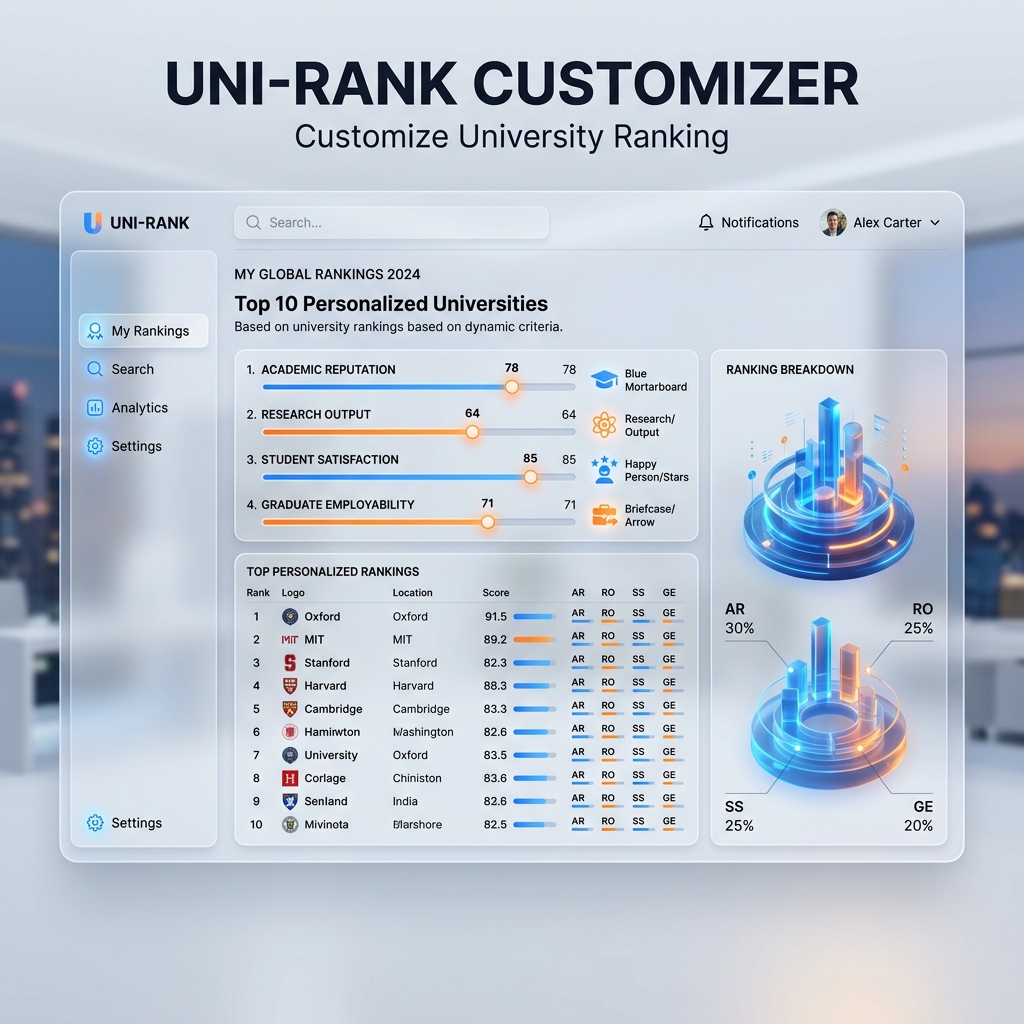
Every year, millions of high schoolers and parents anxiously wait for the new QS World University Rankings to drop. We scroll through the Top 10, nod at the usual suspects (MIT, Stanford, Oxford), and assume that #15 is objectively better than #25.
But here is the truth that the ranking publishers don’t want you to think about: The default QS ranking is designed for the "average" global student. And you are not average.
If you are a career-focused international student trying to land a high-paying job in Silicon Valley or London, the factors that make a university "prestigious" might not match what actually matters for your career. Let’s dissect the flaws of default rankings and look at how you can build a list tailored strictly to your priorities.
Flaw #1: The "Academic Reputation" Echo Chamber (30% Weight)
Almost a third of a university’s QS score comes from a survey sent to academics, asking them which universities they consider the best in their field. While this sounds good on paper, it creates an institutional echo chamber. A university that was world-class in 1980 will continue to get voted as world-class in 2026 simply because of legacy prestige, even if its actual teaching quality has declined.
Who it hurts: Agile, young universities that have cutting-edge modern facilities but lack 200 years of history.
Flaw #2: Research Volume over Career Preparedness
QS heavily rewards universities for Citations per Faculty (20% weight). While research output is vital for PhD candidates, it has almost zero correlation with the undergraduate experience. A Nobel-prize-winning professor who spends 95% of their time in a laboratory and never teaches undergrads adds massive ranking points to a university. But for an undergrad who is taught by teaching assistants in 300-person lecture halls, that research prestige offers very little day-to-day value.
How to Build a Custom Ranking for Your Specific Profile
To find a university that actually fits your future, you need to strip away criteria that don't matter to you and double down on the ones that do. Here are three distinct profiles and how they should customize their weightings:
Profile A: The Career-First Undergrad
Your Goal: High employability, industry connections, and high starting salaries.
- Employer Reputation: 40% (Up from 15%)
- Employment Outcomes: 30% (Up from 5%)
- Academic Reputation: 10% (Down from 30%)
Result: Younger tech schools like Nanyang Technological University (NTU) or Georgia Tech will surge to the top of your list, showing you the real powerhouses of job placement.
Profile B: The Research Prodigy (Master's/PhD Track)
Your Goal: Academic prestige, laboratories, funding, and publication output.
- Citations per Faculty: 40% (Up from 20%)
- Academic Reputation: 30% (Stable at 30%)
- Employer Reputation: 10% (Down from 15%)
Result: Heavyweight research hubs like Caltech and UC Berkeley will rightfully claim the crown, guiding you to top-tier academic output.
Profile C: The Global Citizen (International Student)
Your Goal: Global networking, diversity, support for visa sponsorship, and international integration.
- International Faculty/Student Ratio: 30% (Up from 10%)
- Sustainability: 20% (Up from 5%)
- Employer Reputation: 20%
Result: Highly cosmopolitan hubs in the UK and Australia (like the University of Melbourne or UCL) will leap forward as the most welcoming global environments.
Stop letting standard rankings make your choice for you. Head over to the UniRankHub Custom Weights Calculator to build your own personalized ranking. Toggle the weights in real-time, see which underdog universities leap into your top 3, and download your custom list as a CSV!